Skip to content

Blog

Deploying a shared JupyterHub on the EOSC EU Node

Shared computational research infrastructure matters.

JupyterHub has become a standard piece of infrastructure in data-intensive research across many disciplines. Although this work was initially developed for a STEM project, its value for arts and humanities work is no different, illustrating how DRI initiatives like CCP-AHC allow for cross-discipline knowledge sharing. When a research team needs a common environment (the same software, the same data access, the ability to hand work off between colleagues without a reinstall), a managed JupyterHub is one of the most effective answers available. Every user gets their own notebook server, isolated from their colleagues but pulling from a shared image; a PI can open a colleague's notebook and run it without ceremony.
Developing actionable workflows for the social sciences and humanities with Galaxy

In this blog post, I explain what research workflows are, why they matter for social science and humanities research, and what I learned about turning them into something researchers can actually use—using the Galaxy Project’s workflow manager infrastructure as a concrete example. This report was first prepared for the ATRIUM TNA blog, and also appears online at https://www.atrium-research.eu/blog/developing-actionable-workflows-for-the-social-sciences-and-humanities-with-galaxy-a-report-on-a-tna-visit-to-acdh-vienna/.

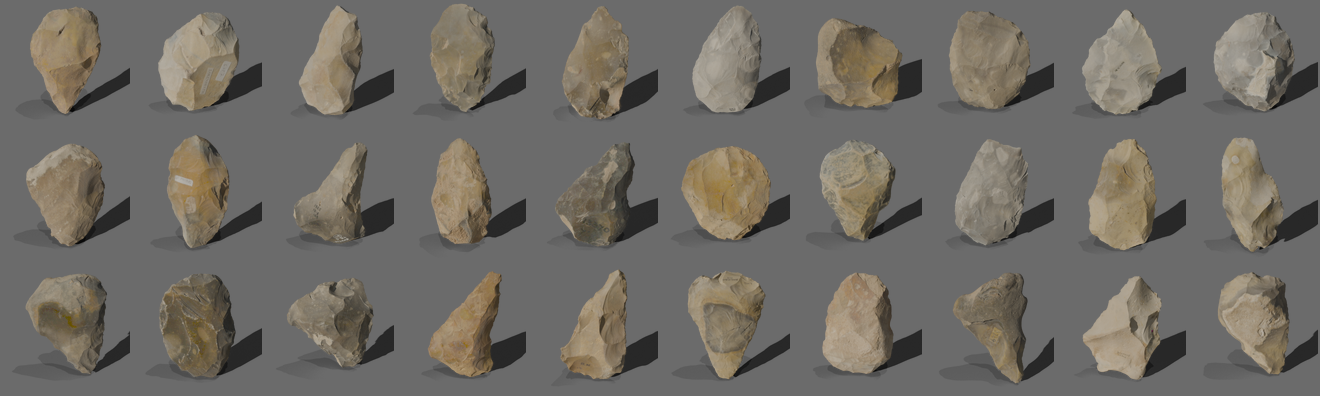
Archaeological rendering at 2,600 models per hour: HPC for digital heritage collections

Rendered 3D models of Stone Age handaxes

When you have 2,637 three-dimensional high-resolution scans of Stone Age handaxes and need thumbnail images for each, you have a few options. You could render them one by one on your workstation, leaving your desktop running for 38+ hours and hoping for the best. Or, if you happen to have access to a supercomputer, you could have them all done in about twenty minutes.

This post describes how we used Hamilton8, Durham University's HPC cluster, to batch-render thumbnail images for a collection of photogrammetric 3D models at the heart of an AHRC-funded research project. It's a small but concrete example of how HPC infrastructure can quietly transform what's practical in arts and humanities research.

Introducing CCP-AHC

We are pleased to introduce Toward a new CCP for Arts, Humanities, and Culture research (CCP-AHC), a UKRI-funded scoping project, which begins on 1 January 2025 and runs for 24 months. The main objective of CCP-AHC is to collaboratively produce a multi-year roadmap for a new Computational Collaborative Project (CCP) serving Arts, Humanities, and Culture researchers. The draft roadmap will be published by the end of 2025, and the final roadmap will be published by the end of 2026.